A Volkswagen DSG that bangs into gear, hesitates when pulling away, shifts harshly, enters limp mode, or displays a transmission warning does not automatically need a complete transmission replacement.
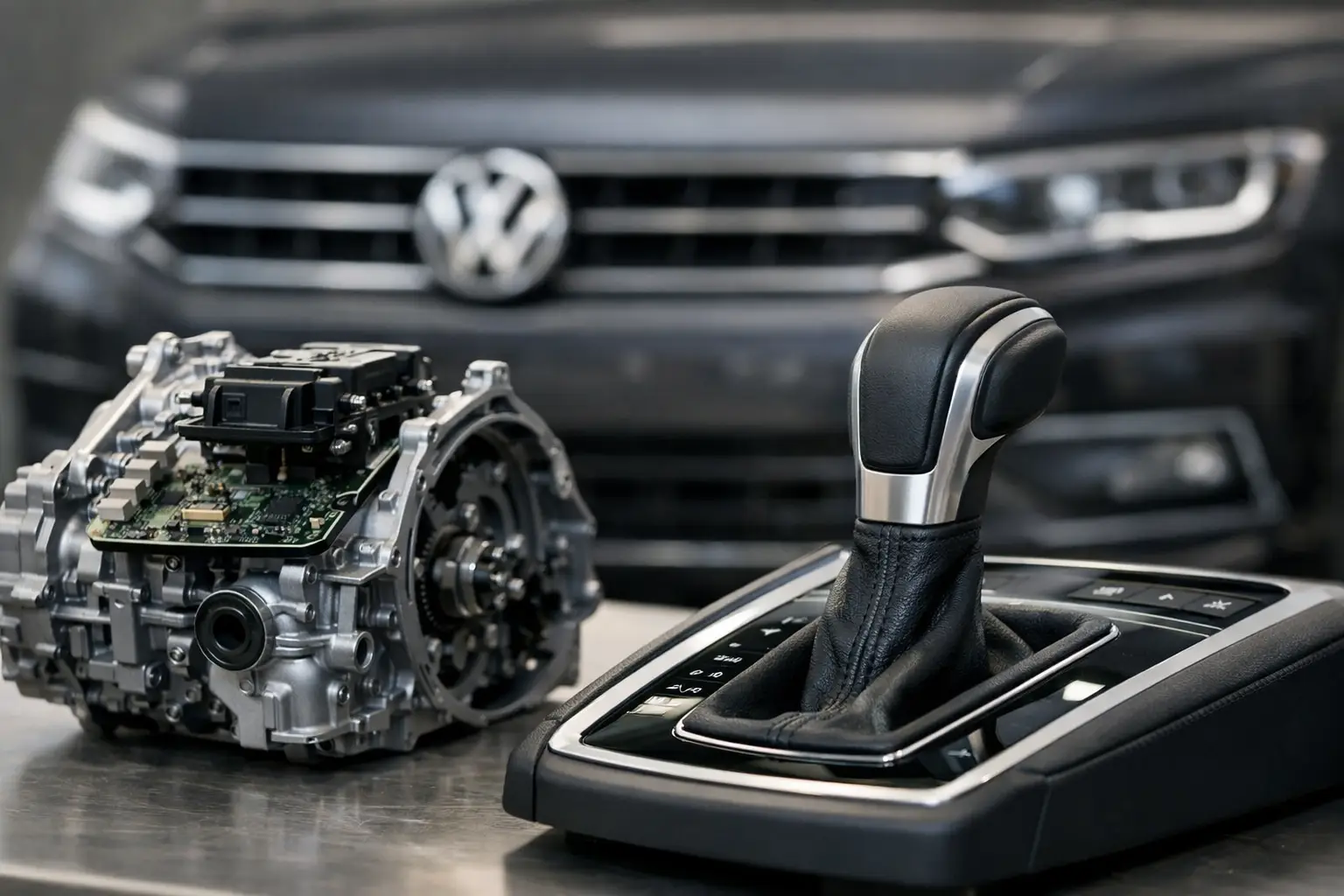
DSG transmissions combine mechanical components, electronically controlled clutches, hydraulic pressure control, sensors, solenoids, a mechatronic assembly, and transmission-control software. A fault in one area can create symptoms that may appear much more serious than the actual failure.
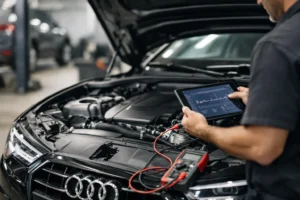
At Eurocraft Automotive in Orlando, the first step is diagnosis. The goal is to identify whether the problem is mechanical, hydraulic, electrical, electronic, software-related, or a combination of several systems before recommending major repairs.
What Volkswagen DSG Transmission Programming Actually Means
The term “DSG programming” can describe several different procedures, and they are not interchangeable.
A software update installs revised factory calibration into the transmission control unit, or TCU. Volkswagen may release updated software to address known shift-quality concerns, communication issues, drivability problems, or operating strategy changes.
Coding and configuration establish the correct identity and equipment settings after control-module replacement, recovery, or certain repairs. A replacement mechatronic unit or TCU may need to be properly configured before it can operate correctly with the vehicle.
Basic settings and clutch adaptations allow the transmission to relearn clutch engagement points, hydraulic values, actuator positions, and operating parameters. These procedures may be required after clutch work, mechatronic repair, transmission repairs, software programming, or loss of learned values.
Performance TCU calibration is different again. It can modify shift strategy, torque management, clutch-pressure targets, launch behavior, and shift speed where the transmission hardware and engine calibration support those changes.
Programming, coding, adaptation, or electronic repair should only be performed after the underlying condition has been properly identified.
When a DSG Transmission Does Not Need Complete Replacement
A transmission warning, harsh engagement, loss of gears, delayed Drive or Reverse, communication fault, or limp-mode condition does not automatically mean the complete transmission has failed.
Because DSG transmissions combine hydraulic, mechanical, and electronic systems, a relatively localized fault can sometimes create symptoms that look like a major transmission failure.
Depending on the diagnosis, the correct repair may involve the mechatronic unit, electronic control circuitry, wiring, sensors, solenoids, hydraulic components, software recovery, programming, coding, or adaptation rather than replacing the complete transmission.
For that reason, Eurocraft Automotive evaluates the system before condemning the entire assembly.
Fault-code information, live data, transmission temperatures, clutch and adaptation values, commanded versus actual gear positions, hydraulic behavior, power supply, communication networks, battery condition, and vehicle repair history may all be relevant to the diagnosis.
There are situations where complete transmission replacement is necessary. However, replacing the entire unit before identifying the actual failure can result in a much larger repair bill than needed.
When Programming Is the Right Repair
Programming may be appropriate after a confirmed software-related concern, control-module replacement, failed programming event, mechatronic repair, or a repair that requires relearning or recalibration.
A Volkswagen with delayed engagement after mechatronic repair may require successful basic settings followed by a controlled road-test adaptation procedure.
A transmission control module that has corrupted software or communication problems may require software recovery or controlled bench-level procedures, depending on the module and the type of failure.
A tuned GTI, Golf R, Jetta GLI, or other Volkswagen application may also require coordinated ECU and TCU calibration so the transmission receives accurate torque information and can manage additional engine output properly.
Programming is not the answer to every harsh shift.
If the transmission has excessive clutch wear, contaminated fluid, internal hydraulic pressure loss, damaged wiring, unstable system voltage, mechanical damage, or a failed sensor, changing software alone will not create a durable repair.
Symptoms That Need Proper Diagnosis First
Common DSG concerns may include:
Delay selecting Drive or Reverse Shuddering when pulling away Hard upshifts or downshifts Transmission warning messages Limp mode Gear indicator flashing Intermittent loss of gears Low-speed hesitation Abnormal noises No-start conditions related to gear recognition Communication faults with the transmission control unit
Some DSG behavior at very low speed can be characteristic of the design, especially as the clutches engage and disengage during parking maneuvers or slow traffic.
However, repeated jolts, worsening hesitation, warning lights, delayed engagement, or abnormal noises should not be ignored.
A proper evaluation should include a complete vehicle scan, not just a generic code check.
The technician may need to review fault details, freeze-frame data, live data, transmission temperatures, clutch adaptation values, commanded and actual gear positions, communication between the engine and transmission modules, power supply, and charging-system condition.
Low voltage during programming or adaptation can create additional problems in a vehicle that already has an electronic concern.
The Difference Between Adaptation and a Reset
A common misconception is that resetting DSG adaptations will repair any rough-shifting transmission.
Adaptations are learned values that help the TCU control clutch engagement and gear changes according to the current condition of the transmission.
Erasing those values may temporarily change how the vehicle feels, but it does not repair worn clutches, hydraulic faults, failing electronics, or a weak mechatronic unit.
The transmission must relearn within its available operating range.
If the system cannot complete basic settings or relearn acceptable values, that may point toward an underlying repair need rather than a programming problem.
After a legitimate adaptation procedure, a controlled road test may be required so the TCU can verify and refine learned values under specific operating conditions.
Skipping that process, performing it with unresolved engine faults, incorrect fluid level, unstable voltage, or another active problem can leave the vehicle with poor shift quality.
Software Recovery and Mechatronic Repair
A failed programming event, water intrusion, internal electronic failure, wiring problem, or previous incorrect repair can leave a DSG control unit unable to communicate or operate correctly.
The next step should be measured diagnosis rather than immediate parts replacement.
Depending on the Volkswagen model and transmission generation, diagnosis may involve verifying power supply, grounds, CAN communication, module wake-up signals, sensor data, hydraulic operation, and software status before programming or repair is attempted.
If replacement is necessary, the correct module or mechatronic assembly must be installed, configured, programmed, and calibrated to the vehicle.
Used units may sometimes be an option, but they can present additional problems including incompatible software, component-protection issues, configuration differences, or hidden internal wear.
The least expensive part is not always the least expensive repair.
The correct choice depends on the exact transmission version, the condition of the vehicle, available parts, software compatibility, and the customer’s long-term plans.
DSG Programming for Modified Volkswagens
For performance vehicles, TCU programming should be treated as part of the complete drivetrain system rather than an isolated upgrade.
The engine ECU reports torque information to the transmission, and the DSG uses that information to calculate clutch pressure, shift strategy, and protective limits.
When engine output increases beyond the factory calibration, the transmission calibration may also need to be adjusted so it can manage the additional torque correctly.
That does not mean every modified Volkswagen needs the most aggressive available TCU calibration.
A daily-driven vehicle may benefit more from predictable shift behavior, appropriate torque management, proper clutch pressure, and thermal protection than maximum launch aggressiveness.
Hardware condition matters as well.
Programming cannot repair worn clutch packs, damaged mechatronics, cooling problems, hydraulic faults, or the effects of repeated hard launches.
Before custom ECU or TCU calibration, the vehicle should be scanned for faults and evaluated for maintenance and mechanical concerns.
Engine misfires, boost leaks, cooling-system problems, worn drivetrain mounts, or transmission faults can all affect shift quality and should not be mistaken for a tuning problem.
What a Proper DSG Programming and Repair Process Looks Like
A professional DSG service begins by identifying the exact transmission, module software, vehicle configuration, and customer concern.
The vehicle should be scanned and inspected for faults that could interrupt programming or affect the final result.
Battery voltage must be stabilized with appropriate support equipment during programming.
The technician must confirm that the intended software, procedure, and calibration match the specific vehicle.
After programming, coding, repair, or adaptation, the transmission control system should be checked for proper communication and fault-free operation.
Basic settings should be completed when required, followed by verification during an appropriate road test.
The final step is confirming that the original complaint has actually been corrected rather than assuming that a successful software flash automatically means the repair is complete.
At Eurocraft Automotive, we approach DSG transmission problems with diagnosis first.
If the transmission can be repaired correctly without replacing the complete assembly, that option should be considered. If replacement is truly necessary, the recommendation should be supported by testing and evidence.
Volkswagen DSG Transmission Service in Orlando
Eurocraft Automotive provides Volkswagen DSG diagnostics, programming, coding, adaptation, mechatronic evaluation, electronic repair support, and performance TCU calibration in Orlando.
If your Volkswagen is experiencing harsh shifting, delayed engagement, warning messages, limp mode, communication faults, or other DSG-related problems, proper diagnosis should come before replacing expensive components.
Contact Eurocraft Automotive at 407-512-5877 or schedule an appointment online.