A warning light on a BMW, a weak A/C system in an Audi, or an intermittent no-start in a Mercedes is rarely solved by guessing. European auto repair in Orlando often involves closely connected mechanical, electrical, and software systems.
The visible symptom may be simple, but the cause can be a sensor signal, a wiring fault, a calibration issue, a cooling-system leak, or a control module that requires proper setup after repair.
For that reason, choosing a repair facility should be about more than finding someone who can replace parts. It should be about finding technicians who can identify what failed, explain why it failed, and complete the repair using procedures that support the vehicle’s long-term reliability.
What Proper European Auto Repair in Orlando Looks Like
European vehicles are engineered around systems that communicate with one another. The engine, transmission, battery-management system, climate control, steering, safety systems, and infotainment modules may all share information across the vehicle network.
A fault in one area can create warnings or drivability symptoms somewhere else.
A proper diagnostic process begins with the customer’s concern and a careful inspection, not an assumption based on a dashboard message. Fault codes are useful, but a code does not automatically identify the failed part. It identifies a condition the module detected.
For example, a code related to mixture control might be caused by a vacuum leak, fuel-delivery issue, sensor problem, intake fault, or an underlying mechanical condition.
The next steps may include checking live data, testing power and ground circuits, inspecting connectors, verifying fluid condition, pressure-testing a cooling system, or confirming whether software updates or adaptations are relevant.
The exact process depends on the vehicle and symptom. This approach can take more time upfront than replacing the most likely part, but it often prevents repeat repairs and unnecessary expense.
Why Orlando Conditions Matter
Central Florida heat is hard on vehicles. High ambient temperatures place extra demand on cooling systems, air-conditioning components, batteries, engine mounts, rubber hoses, and electronic modules.
Stop-and-go traffic adds heat cycles, while heavy rain and humidity can expose weaknesses in seals, drains, wiring, and connectors.
Cooling-system problems deserve early attention. On many European vehicles, plastic cooling components, expansion tanks, water pumps, thermostats, and hoses can age before an owner sees a major leak.
A sweet smell, low coolant warning, rising temperature gauge, visible residue, or a heater that changes temperature unexpectedly should be inspected promptly. Continuing to drive an overheating vehicle can turn a manageable repair into serious engine damage.
A/C concerns should also be diagnosed rather than simply recharged. Low refrigerant usually indicates a leak, but poor cooling can also result from a pressure sensor, compressor-control issue, blend-door fault, cooling-fan problem, or electrical communication issue.
Finding the source matters, especially in Orlando, where air conditioning is a daily necessity rather than an occasional convenience.
Maintenance Is More Than an Oil Change
Scheduled maintenance is one of the most practical ways to avoid larger repairs, but it should follow the vehicle’s needs rather than a one-size-fits-all menu.
Oil service remains essential, particularly for turbocharged engines that depend on clean oil and proper service intervals. The correct oil specification, filter, fill level, and reset procedure all matter.
Brake, suspension, steering, and alignment inspections are equally important. A vehicle that pulls, vibrates at highway speed, wears tires unevenly, or feels loose over bumps may have more than an alignment issue.
Worn control-arm bushings, ball joints, wheel bearings, tires, dampers, or steering components can affect handling and tire wear. Aligning a vehicle before correcting worn parts may not produce a lasting result.
Transmission, differential, transfer-case, and brake-fluid service should be considered according to the manufacturer’s recommendations, vehicle age, driving conditions, and service history.
There is no universal answer for every model. A vehicle with unknown history may need a more careful assessment before fluids are serviced, particularly when it already has shifting concerns or other symptoms.
Electrical and Warning-Light Diagnosis Requires Context
Modern European vehicles can display multiple warnings from one underlying problem.
A weak battery, charging-system fault, poor ground connection, water intrusion, or network communication issue can produce messages that appear unrelated. Replacing modules without verifying electrical fundamentals can be expensive and ineffective.
Battery replacement itself can require more than installing a new unit. Many vehicles need battery registration or coding so the charging system recognizes the battery’s type, capacity, and age.
If that process is skipped, charging behavior may not be correct, potentially shortening battery life or contributing to electrical complaints.
The same principle applies to control modules. Some replacements require programming, coding, calibration, security access, or data transfer before they function correctly.
A module may be physically installed yet still be incompatible with the vehicle until the required electronic procedures are completed. This is why a repair plan should account for both the hardware and software sides of the job.
Programming, Software Recovery, and Performance Work
Advanced electronics work is not a push-button add-on.
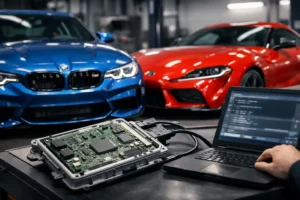
ECU or DME unlocking, ECU and TCU programming, coding, software recovery, calibration, bench procedures, and boot procedures require the correct equipment, stable power support, verified software files, and a clear understanding of the vehicle’s current configuration.
Before any programming or tuning work, the vehicle should be mechanically sound. Existing misfires, boost leaks, fuel-delivery problems, cooling concerns, transmission faults, or unresolved warning lights should be addressed first.
Adding performance to a vehicle with an underlying problem does not correct the problem. It can make diagnosis more difficult and place additional stress on already compromised components.
Custom tuning also involves trade-offs. The correct approach depends on the platform, fuel quality, modifications, intended use, transmission condition, and owner expectations.
Some owners want a more responsive daily driver, while others are building toward a specific performance goal. Clear communication about the vehicle’s condition and realistic limits is part of responsible performance work.
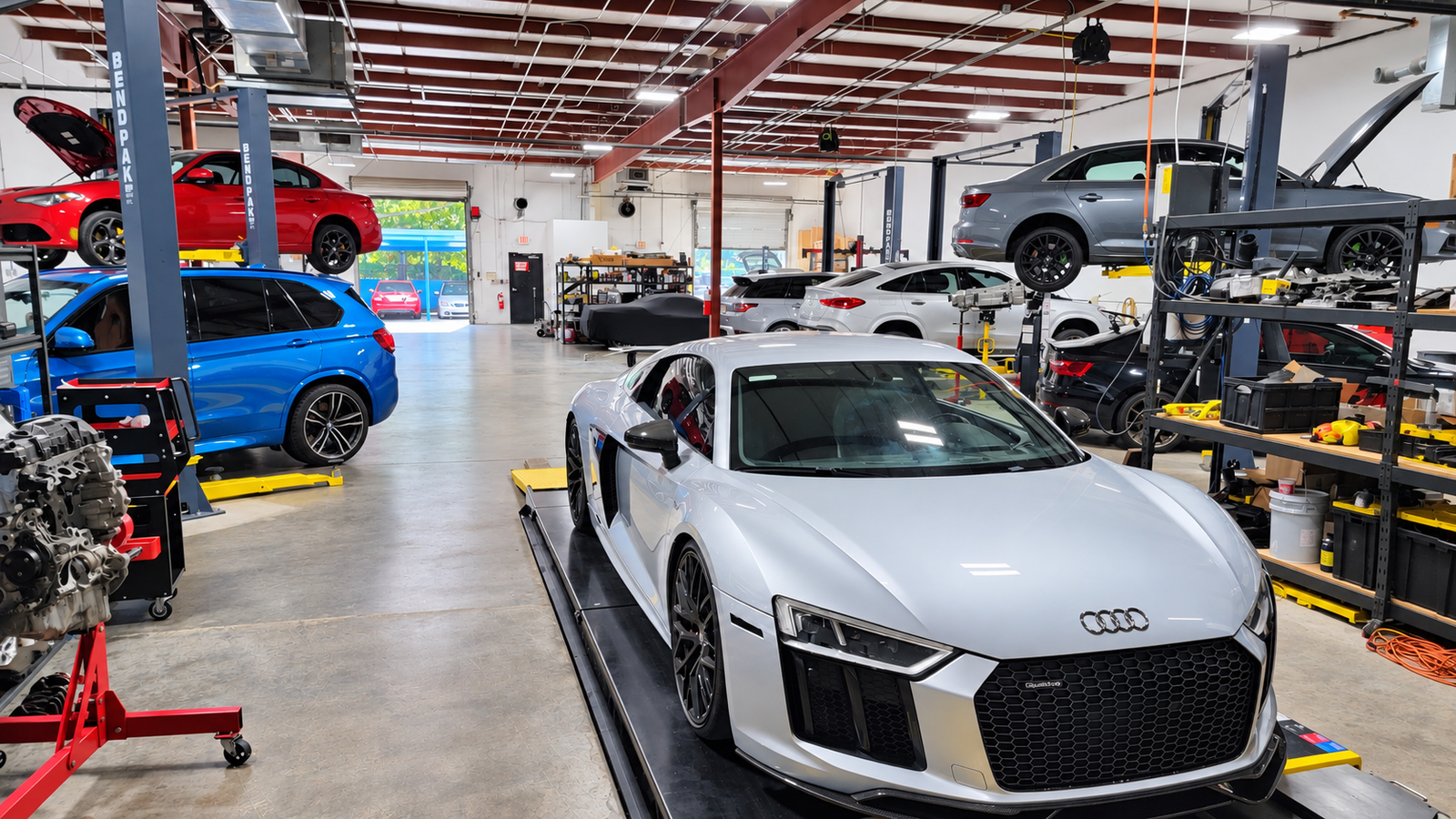
Eurocraft Automotive provides routine service, advanced diagnostics, programming, coding, calibration, and performance services for BMW, Mercedes-Benz, Audi, Volkswagen, Porsche, MINI, Land Rover, Mercedes-Benz Sprinter, Toyota Supra, and selected exotic and performance vehicles.
When to Schedule an Inspection
Some symptoms should not wait for the next planned service.
A flashing check engine light, overheating warning, reduced-power message, brake warning, burning smell, coolant loss, oil leak near hot components, harsh shifting, or repeated battery discharge warrants a timely inspection.
Acting early can reduce the chance of secondary damage.
Other concerns are less urgent but still worth documenting: an occasional rough cold start, intermittent warning light, faint suspension noise, declining A/C performance, or a vibration that appears only at certain speeds.
Note when it happens, how long it lasts, outside temperature, recent repairs, and any changes in the way the vehicle drives. Those details can make a diagnostic appointment more efficient.
The best repair decision is not always the least expensive immediate option. It is the one supported by sound testing, correct parts and procedures, and an honest explanation of what is necessary now versus what can be monitored.
A well-maintained European vehicle can remain dependable for years when small concerns are handled before they become expensive ones.
Need European Auto Repair in Orlando?
Contact Eurocraft Automotive at 407-512-5877 or request an appointment online for diagnostics, maintenance, repair, programming, coding, or performance services.