Table of Contents
- What a Timing Chain Does and Why Failure Matters
- 7 Signs of Timing Chain Failure You Should Never Ignore
- Engine Misfire Causes That Point to Timing Chain Wear
- Timing Chain Tensioner Failure and Chain Stretch
- How Much Does Timing Chain Replacement Cost?
- Diagnosing Timing Chain Failure in European Engines
- Frequently Asked Questions
Last Updated: September 16, 2026
What a Timing Chain Does and Why Failure Matters
A timing chain is the metal link that keeps your engine’s crankshaft and camshafts rotating in sync, and when it fails, the consequences are rarely cheap. This guide from Eurocraft Automotive walks through the signs of timing chain failure, the diagnostic steps behind each symptom, and what the repair decision actually looks like for European engines.
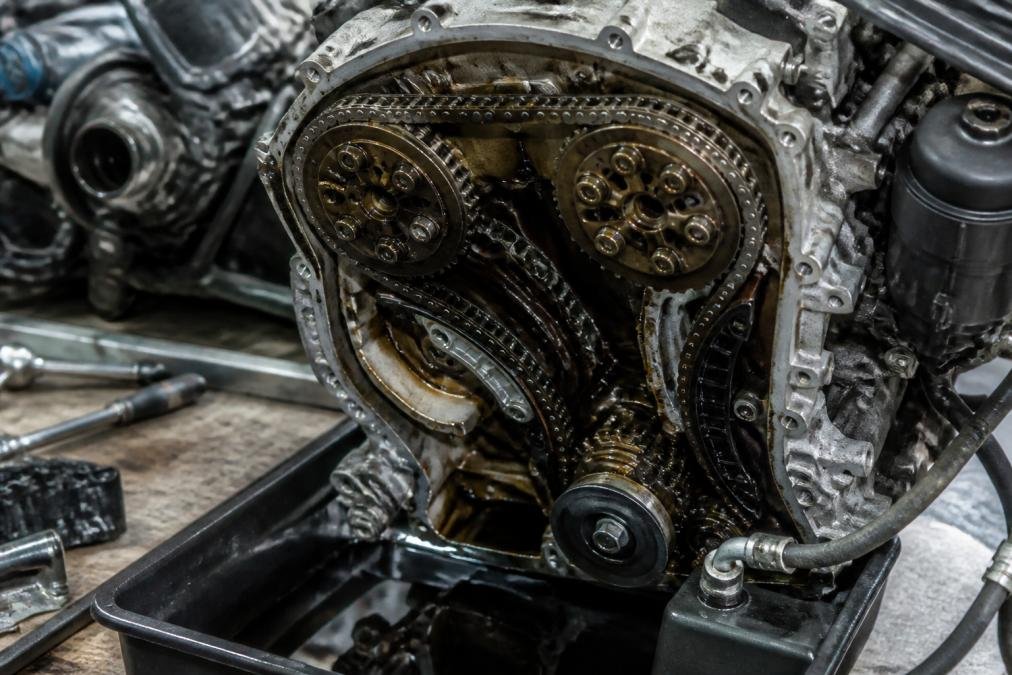
The chain itself is simple. It connects the crankshaft at the bottom of the engine to one or more camshafts at the top, and that connection controls exactly when each valve opens and closes relative to piston movement. Stretch it, wear out its guides, or let the tensioner lose pressure, and valve timing drifts. On an interference engine, a design common across most modern European powertrains, the pistons and valves occupy the same space at different moments. When synchronization is lost, they can meet. That contact bends valves, cracks pistons, and turns a maintenance job into an engine-out rebuild.
The core tension in this whole topic is that timing chain failure rarely announces itself. It whispers first: a rattle here, a slightly rough idle there, a check engine light you clear and forget. Owners who treat those whispers as noise risk paying for a catastrophic engine failure. Owners who read them correctly pay for a chain, a tensioner, and guides.
Below, we’ll cover the seven symptoms worth acting on, how each one presents on BMW, Mercedes-Benz, Audi, Volkswagen, and Porsche engines, and the inspection and maintenance habits that catch wear before it becomes destruction.
7 Signs of Timing Chain Failure You Should Never Ignore
The seven signs of timing chain failure, ranked roughly by how early they appear, are rattling or slapping noises on cold start, a check engine light with timing-related codes, metal shavings in the oil, engine misfires, rough idle and performance loss, difficulty starting, and a tensioner that has lost its ability to hold pressure. Most owners notice two or three of these before they notice anything serious.
Here is how they map to what’s actually happening inside the engine:
- Rattling or slapping noise on cold start, the earliest and most reliable warning
- Check engine light with camshaft/crankshaft correlation codes
- Metal shavings or debris in the engine oil
- Engine misfire, often on one bank or cylinder
- Rough idle and noticeable loss of engine performance
- Extended cranking or difficulty starting
- Tensioner failure and measurable chain stretch
A common mistake is treating these as separate problems. They are usually one problem: a timing system losing its grip on synchronization. The sections below break down the three most diagnostic symptoms in detail.
Rattling or Slapping Noises on Cold Start
A brief rattle in the first one to three seconds after a cold start is the classic early timing chain symptom. It happens because the tensioner relies on oil pressure to hold the chain tight, and when the engine sits, that pressure bleeds off. A worn tensioner or a stretched chain lets the chain slap against its guides until pressure builds.
What most guides miss is the distinction between a cold-start rattle and a constant rattle. A cold-start-only rattle points to tensioner bleed-down. A rattle that persists once warm suggests the chain has stretched beyond what the tensioner can compensate for, or a guide is already broken. That difference changes the urgency of the repair.
Check Engine Light and Diagnostic Trouble Codes
The check engine light is your engine’s way of saying it has detected a timing discrepancy it cannot correct. On European vehicles, this typically surfaces as camshaft-to-crankshaft correlation codes, often described as “camshaft position correlation” or “crankshaft/camshaft misalignment” faults.
An OBD-II scanner will pull the codes, but reading them is only half the job. The real diagnostic step is comparing commanded valve timing against actual measured timing using live data. If the engine’s computer is commanding one camshaft angle and the sensor reports another, the chain has moved. That gap is the evidence.
Metal Shavings in Engine Oil
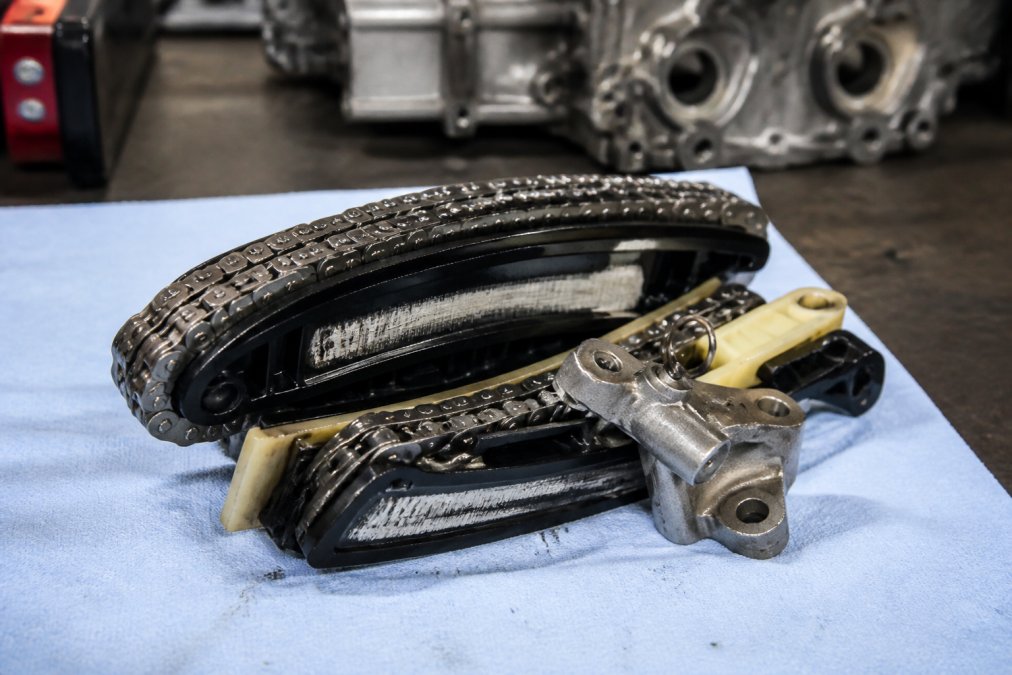
Metal shavings in the oil are a late-stage warning, and finding them means the timing system has already been grinding itself down. As the chain stretches and the tensioner and guides wear, they shed material into the oil. That debris circulates through the engine, contaminating oil passages and accelerating wear everywhere else.
Check for this during oil changes. Dark, glittery oil or visible particles on the drain plug magnet are worth investigating immediately. Oil contamination from a failing timing system rarely stays contained.
Driving with a known timing chain rattle “until it gets worse” is how a chain-and-tensioner job becomes a full engine rebuild. On an interference engine, a jumped timing chain can cause piston-to-valve contact within seconds, and the resulting damage is not repairable with a chain replacement alone.
Engine Misfire Causes That Point to Timing Chain Wear
Engine misfire causes range from worn spark plugs and failing ignition coils to fuel delivery problems, but when a misfire appears alongside a rattle or a timing code, the timing chain moves to the top of the list. Valve timing that has drifted means cylinders are not breathing correctly, and combustion suffers as a result.
The tell is the pattern. A single-cylinder misfire usually points to ignition or fuel. A misfire that appears on one entire bank of a V-engine, or that moves around unpredictably, fits a timing problem better.
Timing Chain Tensioner Failure and Chain Stretch
Timing chain tensioner failure is the mechanism behind most chain problems, because the tensioner is what keeps the chain tight as it wears. The tensioner uses oil pressure and a ratcheting or spring mechanism to take up slack. When it weakens, the chain runs loose, slaps its guides, and stretches faster.
When a timing chain job is done at Eurocraft Automotive, the guides and tensioner are treated as part of the same service, not optional add-ons. A chain replaced on worn guides will wear against those guides from day one, and the noise often returns within a fraction of the original interval.
How Much Does Timing Chain Replacement Cost?
Timing chain replacement depends on the engine layout, how much of the front of the engine must come apart, and whether any secondary damage exists. On a transverse four-cylinder, the job is far less involved than on a V8 or a twin-turbo V6 where the chain sits at the rear of the engine.
| Symptom | Underlying Cause | Urgency |
|---|---|---|
| Cold-start rattle only | Tensioner bleed-down | Schedule diagnosis soon |
| Constant rattle when warm | Chain stretch or broken guide | Stop driving, inspect now |
| Timing correlation codes | Chain has moved out of sync | Diagnose immediately |
| Metal shavings in oil | Guides and chain wearing | Immediate inspection |
| Misfire on one bank | Valve timing drift | Diagnose before parts replacement |
Diagnosing Timing Chain Failure in European Engines
Diagnosing timing chain failure on a European engine requires more than a generic scan tool, because the platforms differ in how they report timing data. BMW, Mercedes-Benz, Audi, Volkswagen, and Porsche each have their own diagnostic protocols, and reading live camshaft correlation values correctly depends on knowing the specific engine family.
Visual Inspection Techniques Without Full Teardown
You can often confirm timing chain wear without tearing the engine apart. A borescope through the oil fill or a removed sensor port lets a technician inspect the chain, guides, and tensioner for visible slack and wear. Checking tensioner extension is another useful signal: a tensioner extended near its limit indicates the chain has stretched.
Preventative Maintenance Schedules for Timing Chains
There is no universal timing chain interval, and that is the honest answer most owners do not want. Unlike timing belts, chains are not always listed with a fixed replacement mileage. Instead, maintenance should follow the manufacturer’s guidance for your specific engine, combined with regular oil changes using the correct specification.
Timing chain failure is a maintenance problem disguised as a sudden breakdown. Regular oil changes at the correct specification and a timing inspection at higher mileage catch most failures before they become engine damage.
Frequently Asked Questions
Is there a warning before a timing chain breaks?
Yes, most timing chain failures give warning signs weeks or months in advance. A rattling or slapping sound on cold start is the most common early indicator, caused by a worn tensioner that can no longer hold the chain tight. You may also see a check engine light with camshaft or crankshaft correlation codes, hear a rough idle, or find metal shavings in the oil. Ignoring these signs of timing chain failure risks a jumped timing chain and piston-to-valve contact, which turns a repair into a full engine replacement.
How much does timing chain replacement cost?
Timing chain replacement depends on the engine, how deep the chain sits in the block, and whether the job requires removing the transmission or front cover. On many European engines, the chain, tensioner, and guides are replaced together as a set, which affects the total. Because the scope of work varies so much by model and labor hours, Eurocraft Automotive recommends contacting the shop directly for a quote based on your specific vehicle rather than relying on general information.
Is it worth fixing a timing chain on a high-mileage European car?
It usually is, especially if the engine still runs and the damage has not progressed to valve or piston contact. Replacing the chain, tensioner, and guides is far less expensive than replacing a destroyed engine, and many European engines run well past 150,000 miles when timing components are serviced on schedule. The decision comes down to the vehicle’s overall condition and value. A compression test and oil analysis help confirm the engine is healthy enough to justify the repair.
Can a timing chain be inspected without engine disassembly?
Partial inspection is possible. A technician can read live camshaft and crankshaft correlation data with an OBD-II scanner, check for timing-related diagnostic trouble codes, and examine oil for metal shavings or sludge. On some engines, a borescope can reach the timing cover through the oil fill or a sensor port. However, confirming chain stretch or tensioner wear often requires removing the valve cover or front cover, so a definitive diagnosis may need some disassembly.